A Powerful Tribute to Link Wray’s Rumble!
In mid-August, Fredericksburg rumbled once again as HFFI celebrated Link Wray and his place in Fredericksburg’s rock ’n’ roll history with a Link Wray Tribute Party at Colonial Tavern. Aaron and the Beaux Ties took the stage for the evening, performing for a packed house and bringing the music of the era to life. Outside, a lineup of classic cars filled the parking lot, adding to the atmosphere and giving guests even more to enjoy throughout the celebration. The festivities also included our Rock, Roll, Rumble & Rebellion trolley tours, exploring Fredericksburg’s rock n’ roll history and Wray’s connections to the local music scene.
We were especially honored to welcome members of Link Wray’s family, whose participation made the celebration even more meaningful. We also extend our sincere thanks to the Shawnee representatives who joined us and opened the event with a prayer.
HFFI sends a special thank you to Mayo Carter for helping make this event possible, and we thank all the City’s rock n’ roll fans for a night of rebellious music, history, and a lot of rumble!
Friends, family remember Link Wray with music, stories
BY CLINT SCHEMMER, retired Free Lance-Star editor and writer (who is always dedicated to a good story with great history!).
This article was first printed in the August 2026 issue of the Front Porch Magazine.
Link Wray, a godfather of rock ’n’ roll, departed this earth 20 years ago. But this month in our town, where Wray pioneered rock’s power chord during a 1957 dance, musicians and family will jam and share tales about the charismatic guitarist.
“He would love that,” Link’s eldest daughter, Beth Wray Webb, said of those plans, recalling her dad’s jam sessions at home. “He just enjoyed playing music with people, and we’d all sit there and listen. We’d be up all night and half the day.”
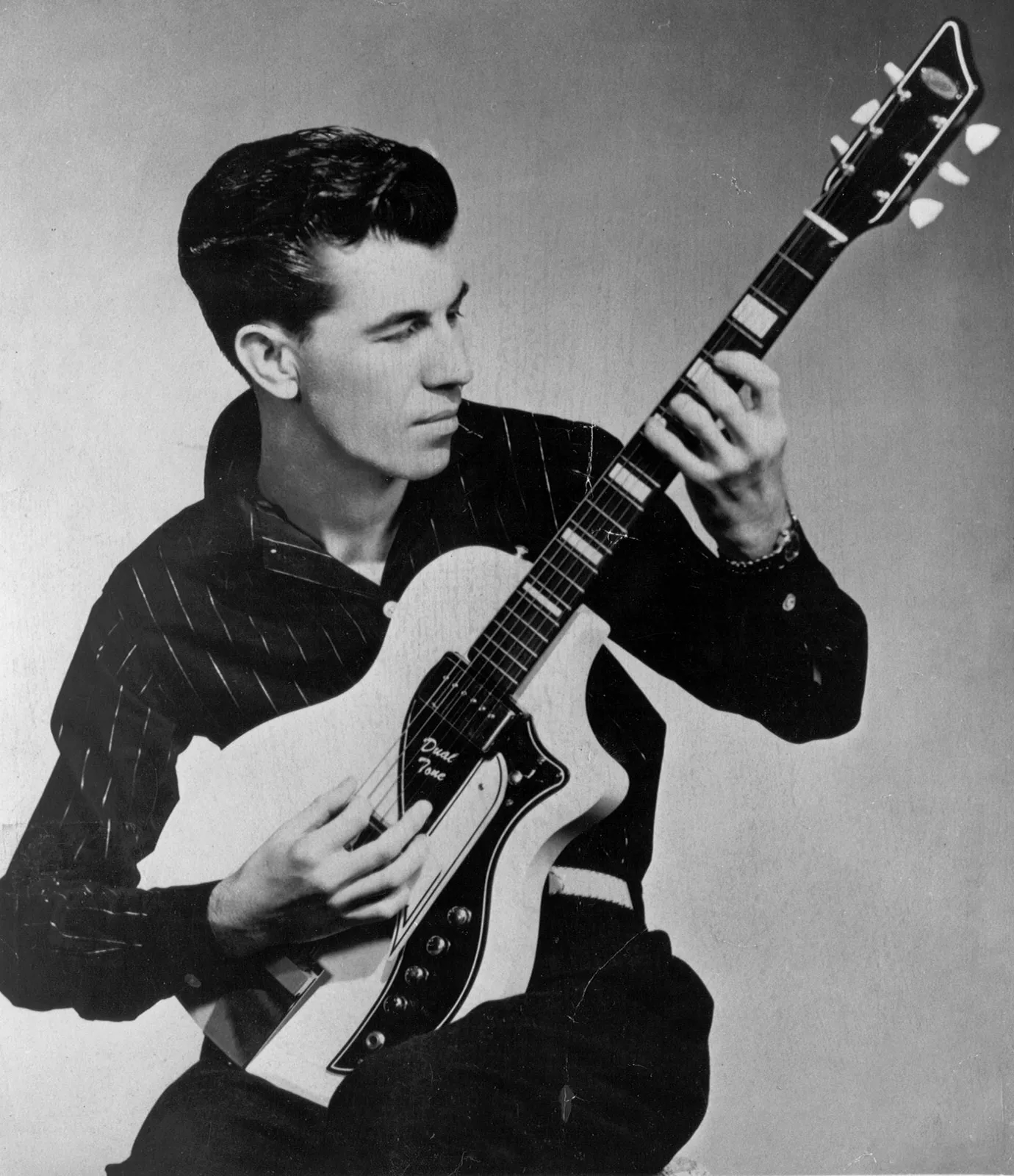
“Rumble,” by Link Wray and The Ray Men, hit the pop charts in 1958.
Virginia recently approved a state historical marker about Wray to be dedicated here this fall. The musician improvised his world-renowned instrumental on stage as he and his band, The Ray Men, played a July 1957 sock hop at the Fredericksburg Arena on the U.S. 1 Bypass. The crowd
went wild, begging for encore after encore.
“God zipped it down into my hands,” Webb recalled her father saying of that moment. His creation, recorded as “Rumble” in 1958, inspired a generation of rockers.
“If it hadn’t been for Link Wray and ‘Rumble’; I would have never picked up a guitar,” Pete Townshend said. Bob Dylan called it the “greatest instrumental ever.” E Street Band guitarist Steven Van Zandt said “It’s the sexiest, toughest chord change in all of rock n’ roll.”
“The animated sounds he got out of his guitar [and] his go-for-broke style would foster a whole new attitude in rock,” wrote Cary O’Dell, a music historian at the Library of Congress, whose National Recording Registry includes “Rumble.”
“He lived his way, and he played that way,” performing until weeks before his death at 76, Webb told the Front Porch. Wray’s hit record sold more than a million copies. In 2023, he was inducted into the Rock Roll Hall of Fame.
Nowadays, “Rumble” resurfaces in Hollywood’s “Independence Day” and “Pulp Fiction,” TV’s “The Sopranos,” commercials for Jack Daniels and Gucci, and on YouTube.
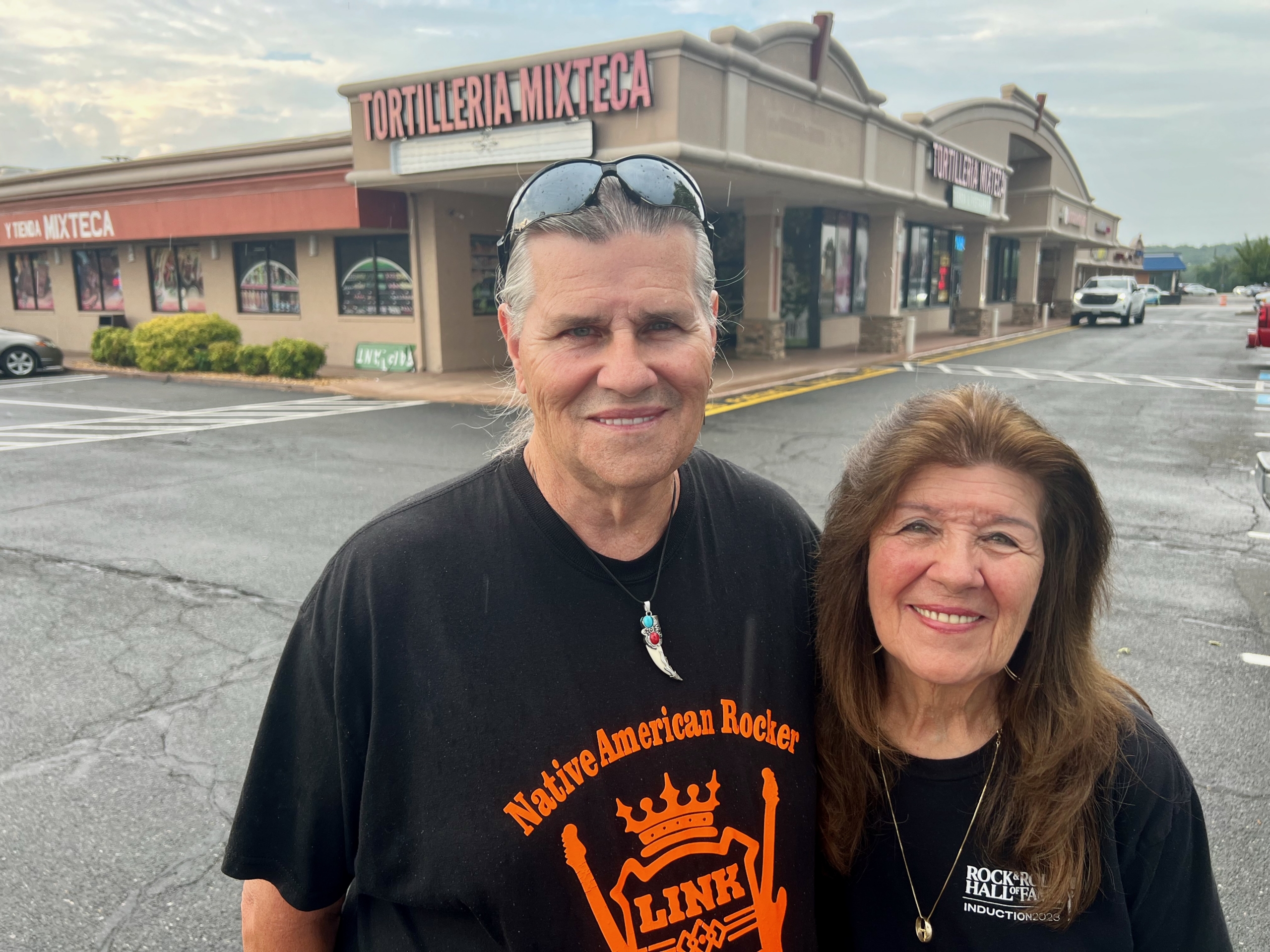
Beth Wray Webb, Link Wray’s eldest daughter, and her brother Link Wray III, visit the Fredericksburg Arena site at Fall Hill Avenue and the U.S. 1 Bypass. There, their dad made rock ’n’ roll history at a 1957 sock hop.
Distinctive for the distortion and tremolo Wray captured in a D.C. studio (the record shot to No. 16 on Billboard charts), “Rumble” sounds edgy and dangerous. Its title nod to gang fights in “West Side Story,” bestowed by the record producer’s teenage stepdaughter, got the tune banned from radio in New York, Boston, and Detroit. Wray’s style—leather jacket, dark shades, and a pompadour—may have contributed, too.
Born Fred Lincoln Wray, Jr., to a Shawnee mother in Dunn, N.C., he was inducted into the Native American Music Awards Hall of Fame in 2006. The 2017 documentary “RUMBLE: The Indians Who Rocked the World” highlights those roots.
At 8, Wray learned guitar from Hambone, a Black circus performer in Dunn. Serving in Korea and Germany during the Korean War, he lost a lung to tuberculosis and spent a year in the hospital. A doctor told him he’d never perform again. Undaunted, Wray kept at it for another six decades. Wray and his musical family later lived in Portsmouth, Vienna, Front Royal, Washington, D.C., and Accokeek, Maryland. He passed in 2005 in Copenhagen, his home for nearly three decades.
The birthplace of “Rumble” meant everything to Link and his family, Webb said. When he died, the family held his memorial service at a Fredericksburg church. They donated one of Link’s guitars and his leather jacket to the Fredericksburg Area Museum.